
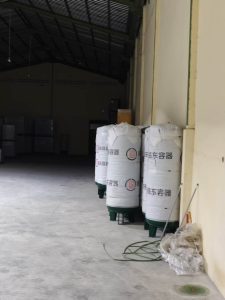
Choosing the right air storage tank starts with picking the right model. You need to match the technical specs and model to the actual working conditions, as well as consider any custom non-standard requirements. At the same time, you also need sharp eyes—know how to check qualifications and distinguish the tank’s craftsmanship and material, so you don’t end up buying a low-quality product that could bring unpredictable risks.
1. Core parameters, match as needed
When choosing a model, you need to focus on four main parameters: design pressure and working pressure (for conventional industrial compressed air tanks, the working pressure is usually 0.8MPa or 1.0MPa, and the design pressure is 5%-10% higher than the working pressure to leave a safety margin); volume (typically 0.3m³-50m³, customizable); material (usually Q345R steel plates, with S30408 or S31603 stainless steel recommended for the food and pharmaceutical industries); and wall thickness (determined based on design pressure, volume, and material).
2. Custom services, covering multiple scenario needs
BORIN has full customization capabilities, able to meet special volume needs (from small tanks of 0.03m³ to large tanks of 100m³), interface positions (like side in/out modified to top in/bottom out), materials (such as 316L stainless steel), and additional accessories (like level meters and thermometers). A design sketch will be provided for confirmation before customization, and the process takes 10–15 days longer than standard products to ensure on-time delivery.
3.Quality Assurance and International Certification
Common quality issues for pressure vessels mainly fall into three categories: first, weld defects, such as pores or slag in the welds, and delayed cracks appearing some time after welding; second, base material problems, where cracks can easily form in the heat-affected zone of the weld; third, corrosion issues, which can lead to overall or local thinning of the plates and even pitting. These problems can cause leaks, affect production efficiency, pollute the environment, and in some cases, even lead to explosions.
Some small manufacturers, to cut costs, will skimp on materials (using thinner steel plates), processes (reducing the proportion of inspections), and components (choosing low-quality safety valves). Simple pressure vessels are particularly at risk because they don’t need to be registered, making problems more hidden.
Welcome everyone to visit our facotry and explore the possibility of cooperation
TEL:+86 19857000898
Contact email:xuhaitao@zjboling.cn
Address:No. 6, Chihuai Road, Kaihua, Quzhou City, Zhejiang Province,China