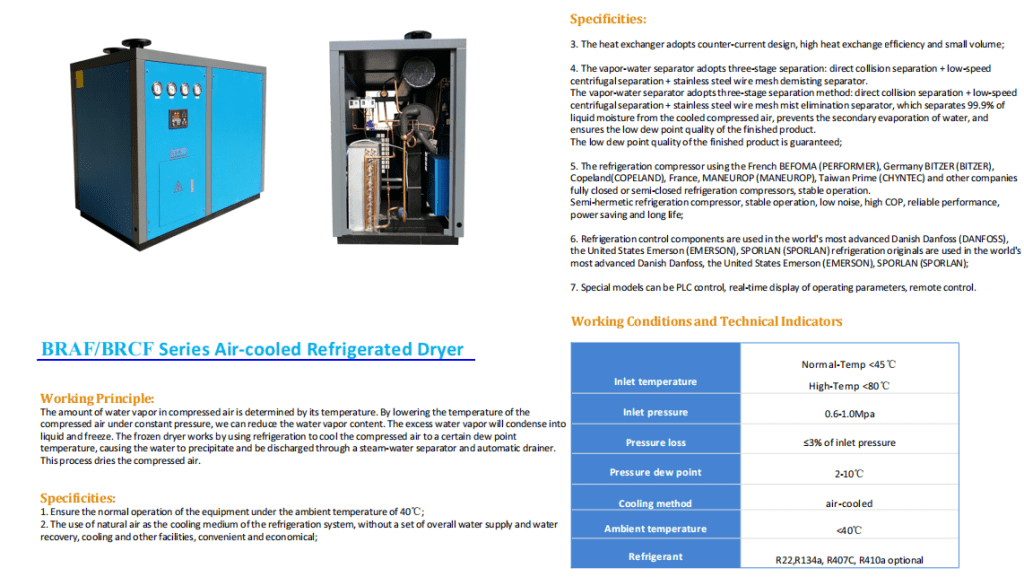
Air compressors and dryers are key for textile quality and efficiency. Future intelligence and greening demands will push the industry to upgrade, enhancing efficiency, conservation, and controllability. This will boost global textile sustainability.
1. Core role: Drive and process optimization
- Efficient weft insertion on jet looms:
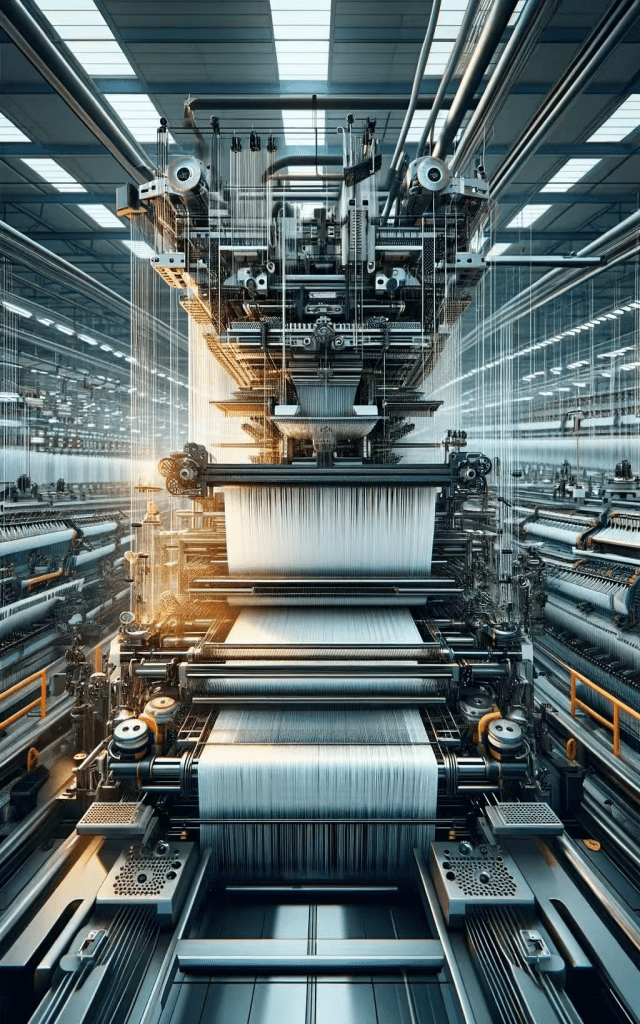
The air compressor powers the jet loom’s nozzle, spraying air thousands of times per second for weft insertion, replacing traditional methods and boosting speed and accuracy. Compressed air’s oil content must be ≤ 0.1 mg/m³, and pressure dew point below 4℃ to prevent contamination and corrosion.
- Yarn processing and cleaning:
Compressed air humidifies, de – dusts and shapes yarn for flexibility and cleanliness. In air – wrapped spinning machines, dry air prevents yarn dampness and breakage, ensuring process stability.

2. Quality assurance of air dryer
- Accurate humidity control:
The adsorption dryer reduces the dew point of compressed air to -20 ℃, while the freeze dryer stabilizes it at around 3 ℃, effectively removing moisture and avoiding color difference, deformation, or microbial growth in textiles due to moisture.
- Oil free purification technology:
Combined with a three-stage filter (activated carbon+precision filtration), the compressed air has a dust content of ≤ 1 mg/m ³, meeting the strict requirements of the textile industry for cleanliness, ensuring that the fabric is flawless and meets environmental standards.
3. Technological Innovation and Industry Trends
- Energy saving and intelligent upgrade:
The energy consumption of permanent magnet variable frequency air compressors has been reduced by 30%. Internet of Things technology enables remote monitoring and fault warning, optimizes equipment operating parameters (such as pressure and dew point), and reduces manual intervention.
- Domestic substitution acceleration:
Domestic enterprises such as Dongya Machinery have achieved domestic substitution in fields such as semiconductors and new energy by developing oil-free screw air compressors, and gradually penetrated the high-end textile market.
4. Application scenarios and case analysis
- Chemical fiber production:
The slicing dryer relies on dry air to remove moisture from the raw materials, ensuring the uniformity and strength of the chemical fiber materials and avoiding clumping problems.
- Printing and dyeing process:
Dry air accelerates dye penetration and shortens curing time through airflow drying technology, improving color uniformity.